

Articles
How to Identify Fake Medicines: 7 Ways to Spot Counterfeit Drugs

Counterfeit medicine is no longer a problem confined to unregulated markets or back-alley pharmacies. Fake drugs now travel through the same distribution channels as genuine ones, wearing packaging, holograms, and even batch numbers that look convincing at first glance. For a patient standing at a pharmacy counter, the difference between a lifesaving tablet and a dangerous fake can come down to details most people never think to check.
This guide breaks down how counterfeit medicines get made, the warning signs that separate genuine drugs from duplicates, and how technologies like unique authentication codes and QR-based verification are changing the fight against fake medicines.
Why Counterfeit Medicines Are So Hard to Spot?
Modern counterfeiters don’t just copy a label — they replicate blister packs, vial shapes, tablet coatings, and even the security holograms meant to prove authenticity. According to industry estimates, counterfeit and substandard medicines account for a significant share of drugs circulating in some emerging markets, and the World Health Organization has flagged the growing sophistication of fake antibiotics, fever medicines, and lifestyle drugs.
This is exactly why appearance alone is no longer a reliable test. Identifying a fake now requires checking multiple layers of evidence — packaging, seals, digital authentication, and how the medicine behaves once you take it.
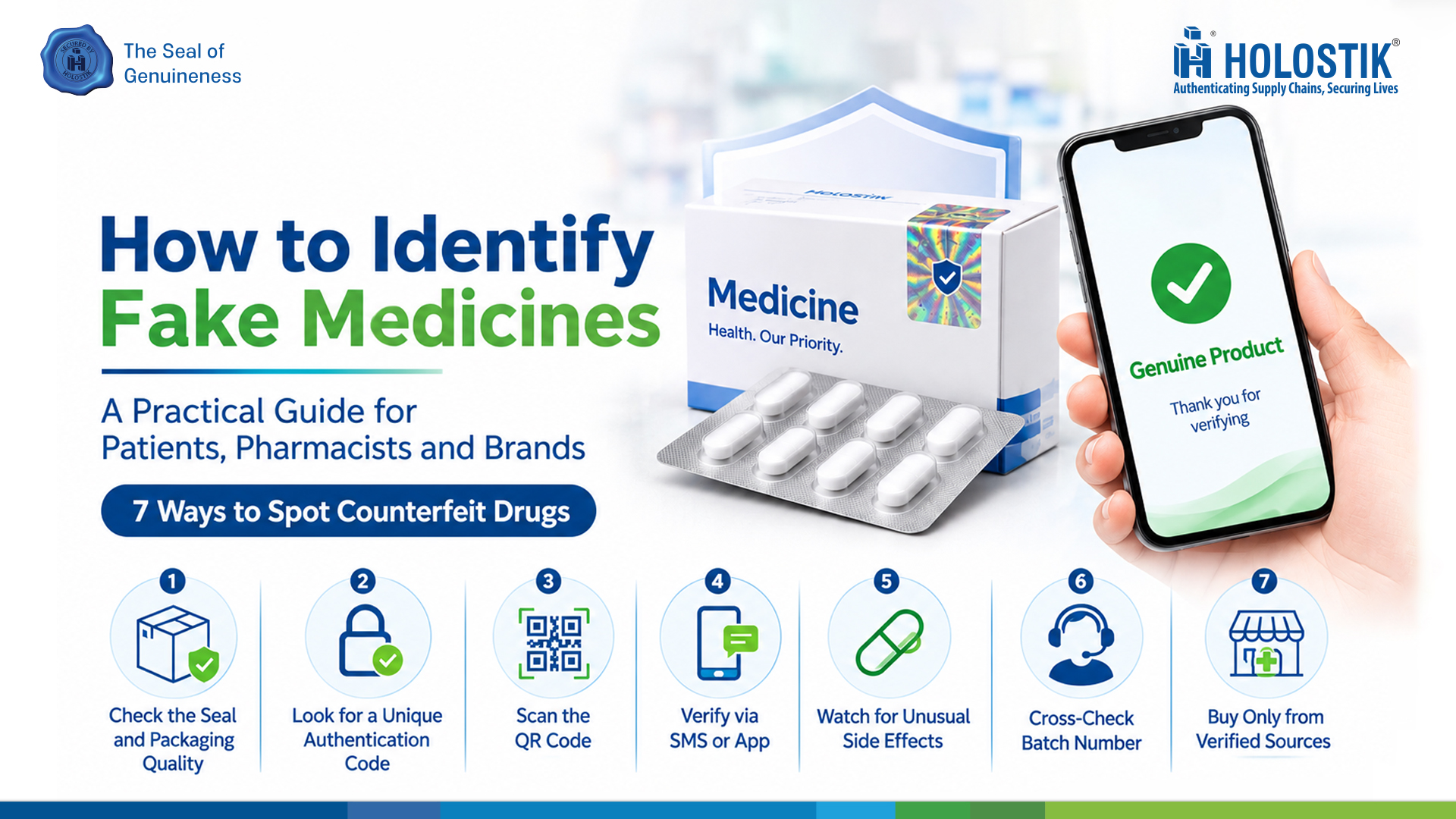
7 Ways to Identify Fake Medicines
1. Check the Seal and Packaging Quality First
Genuine medicine packaging is manufactured to tight specifications. Before you buy or consume a medicine, look closely at:
- The security seal on bottles and boxes – any crack, gap, or sign of re-gluing is a red flag
- Print quality – blurred text, inconsistent fonts, or faded logos often indicate a duplicate medicine
- Batch number and expiry date – these should be clearly printed, not stamped over or smudged
If anything looks even slightly “off” compared to a previous purchase of the same product, don’t take the risk.
2. Look for a Unique Authentication Code on the Medicine
One of the most reliable ways to identify counterfeit drugs today is the unique authentication code printed on genuine packaging. This is a one-time, non-repeating code — often hidden under a scratch-off panel — that is generated specifically for that pack at the point of manufacture.
Here’s what an authentication code on medicine typically looks like in practice:
- Each pack carries its own alphanumeric code, unlike a batch number, which is shared across thousands of units
- The code is scratch-protected so it can’t be read or copied before purchase
- Once verified, that specific code should never return a “valid” result again — a repeat scan of the same code by a different user is a strong signal of duplication
If a product claims to have this feature but the code panel is missing, pre-scratched, or reused, treat it as a serious warning sign.
3. Scan the QR Code Before You Buy
QR codes have become a standard layer of pharmaceutical security because they can carry far more verification data than a traditional barcode, and they link directly to a live authentication check rather than static information.
Here’s how QR-based medicine verification typically works:
- A unique QR code is placed inside the cap, under the label, or on the secondary packaging
- Scanning it opens a secure page confirming whether the product is genuine
- The underlying URL contains a token unique to that pack, so it cannot be duplicated or reused across counterfeit units
- Because the code is tied to a specific print run and serial number, this method is very difficult for counterfeiters to replicate at scale
If a medicine’s packaging includes a QR code, scan it before use — not after you’ve already started the course of treatment.
4. Verify Through SMS or App-Based Mobile Authentication
Mobile Authentication Service (MAS) has made it possible for ordinary consumers, not just lab technicians, to check a medicine’s authenticity in seconds. The process is simple:
- Scratch the panel to reveal the unique code
- Send it via SMS to the number listed on the pack, or enter it into the brand’s verification app or website
- Receive an instant response confirming whether the product is genuine
This SMS-based check has become one of the most widely adopted tools for identifying counterfeit medicines in high-risk categories like antibiotics, painkillers, and cold and fever tablets.
5. Watch for Unusual Side Effects or a Weaker Therapeutic Effect
Counterfeit medicines frequently contain little or no active pharmaceutical ingredient (API), or substitute it with an incorrect dosage or an entirely different compound. This means the clinical warning signs of a fake drug often show up after you’ve already taken it:
- The medicine isn’t working as expected for a condition it has treated effectively before
- New or unusual side effects appear that weren’t present with previous purchases
- An allergic reaction or worsening symptoms develop shortly after starting the medication
If any of these occur, stop taking the medicine and consult your doctor or pharmacist immediately, and report the batch to the manufacturer.
6. Cross-Check the Batch or Lot Number With the Manufacturer
Genuine pharmaceutical companies maintain detailed production records for every batch they release. If a lot number looks unfamiliar or the packaging seems inconsistent, contact the manufacturer directly — most companies maintain a dedicated helpline or email for verifying suspected counterfeit or duplicate medicine.
Manufacturers can typically tell you:
- Whether that specific batch or lot number was ever issued
- Whether similar complaints have been reported for that code
- The correct process for safely disposing of a suspected counterfeit
7. Buy Only From Verified, Licensed Sources
A large share of counterfeit and duplicate medicines enters the market through unverified online sellers, informal pharmacies, or unauthorized resellers. Reducing exposure starts with the point of purchase:
- Buy from licensed pharmacies or manufacturer-authorized retailers
- Be cautious of unusually steep discounts on branded medicines
- Avoid loose tablets or strips sold without original packaging
What To Do If You Suspect a Fake Medicine
If you believe you’ve encountered a counterfeit or duplicate medicine:
- Stop using the product immediately.
- Contact your doctor or pharmacist and describe what happened.
- Report it to the manufacturer using the batch or lot number on the pack.
- Dispose of it through an authorized medicine disposal channel rather than regular household waste.
How Holostik Helps Pharmaceutical Brands Fight Counterfeiting?
Combating counterfeit medicines requires more than identifying fake products after they enter the market. It calls for a comprehensive brand protection strategy that begins at the manufacturing stage and extends across the entire supply chain. Holostik works with pharmaceutical manufacturers to develop integrated anti-counterfeiting and product authentication solutions that help protect product integrity, strengthen supply chain visibility and enable consumers to verify product authenticity.
By combining advanced holographic technologies, tamper-evident packaging and digital authentication systems, Holostik helps pharmaceutical brands build multiple layers of security into their products.
Holostik’s pharmaceutical brand protection solutions include:
- Advanced Security Holograms, Films & Foils: Nano-Optical Imaging (NOI) holograms, security holographic labels and hot stamping foils designed with sophisticated optical features to make unauthorised duplication more challenging.
- Tamper-Evident and Smart Labels: VOID labels, destructible labels, security barcode labels and multi-layer peel-and-reveal labels with QR codes that help indicate unauthorised access or packaging interference.
- Protective Packaging Solutions: Holographic blister, strip-pack films, PVC, induction-sealing wads, shrink sleeves and security-enhanced cartons designed to strengthen packaging integrity and deter product tampering and refilling.
- Unique Authentication and QR/SMS Verification: Unit-level unique authentication codes and QR-based or SMS-based verification systems that allow consumers to check product authenticity through their mobile devices.
- Serialization and Track & Trace: GS1-aligned serialization, aggregation and digital traceability solutions that support product identification, supply chain visibility and consumer-level verification through Holostik’s SureAssure+ platform.
These solutions can be configured according to the pharmaceutical product, packaging format and brand protection requirements, whether for tablets, syrups, injectables or Ayurvedic products. They can also support different requirements, including domestic product authentication, export traceability and consumer verification.
By bringing physical security and digital technologies together, Holostik helps pharmaceutical brands strengthen their defences against counterfeiting while making product authentication more accessible to distributors, pharmacists and consumers.
Frequently Asked Questions
What is an authentication code on medicine?
It’s a unique, one-time code printed or hidden on a medicine’s packaging, generated per unit at manufacture. It can be verified via SMS, app, or QR scan to confirm the product is genuine.
How can I identify a duplicate medicine at home?
Check the security seal for tampering, verify the authentication code via SMS or QR scan, compare print quality against a previous genuine purchase, and watch for unusual side effects after taking it.
Are QR codes reliable for detecting counterfeit drugs?
Yes, when the QR code links to a token unique to that specific pack rather than a generic product page. A genuine QR-based system will flag duplicate or previously scanned codes.
What should I do if a medicine turns out to be counterfeit?
Stop taking it, inform your doctor and pharmacist, report the batch number to the manufacturer, and dispose of it through an authorized medicine take-back program.
Holostik works with pharmaceutical manufacturers to build brand protection and anti-counterfeiting solutions, including tamper-evident holograms, security labels, and GS1-compliant track-and-trace systems, that help brands and consumers verify a medicine is genuine at every step of the supply chain.